DAS PRODUKT IM DETAIL
Beschreibung & Details
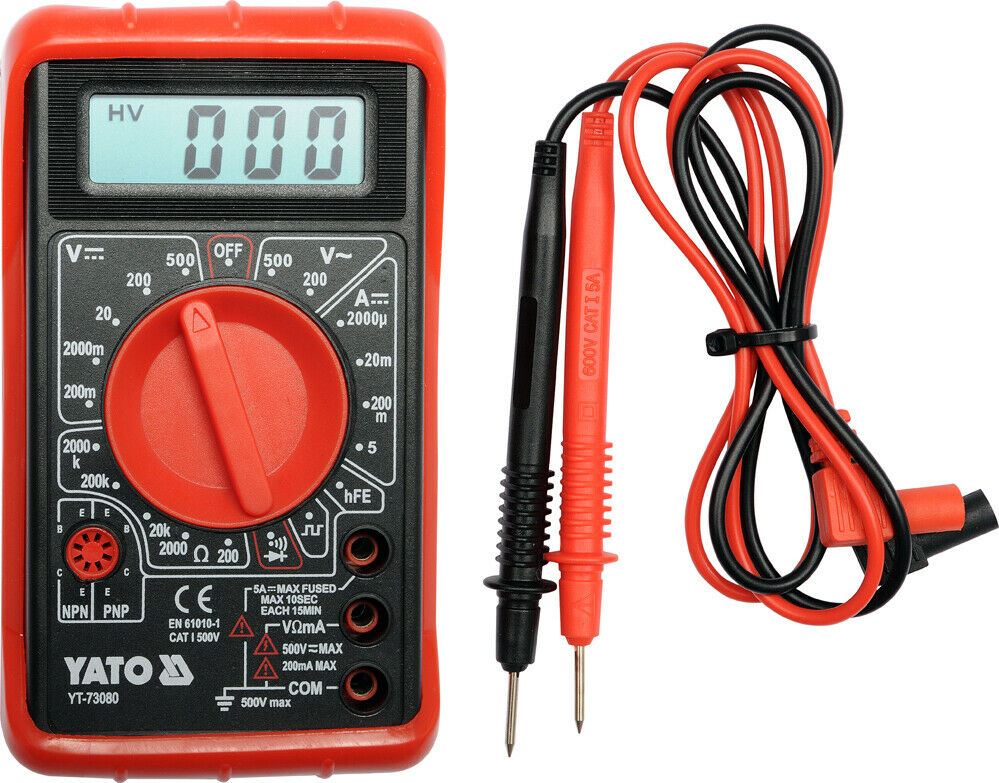
Produktbeschreibung<p style="box-sizing: border-box; color: rgb(0, 0, 0); font-family: Verdana, sans-serif; font-size: 15px; font-style: normal; font-variant-ligatures: normal; font-variant-caps: normal; font-weight: 400; letter-spacing: normal; orphans: 2; text-align: start; text-indent: 0px; text-transform: none; white-space: normal; widows: 2; word-spacing: 0px; -webkit-text-stroke-width: 0px; background-color: rgb(255, 255, 255); text-decoration-thickness: initial; text-decoration-style: initial; text-decoration-color: initial;">Mit dem Universalmessgerät <strong style="box-sizing: border-box; font-weight: bold;">YT-73080</strong> mit einem manuellen Bereich für jede Messung können Sie grundlegende und erweiterte elektrische Messungen durchführen. Zusätzlicher Schutz gegen mechanische Beschädigung ist der sogenannte <strong style="box-sizing: border-box; font-weight: bold;">Holster</strong> - ein Gummigehäuse, das über das Gerätegehäuse gezogen wird.</p><p style="box-sizing: border-box; color: rgb(0, 0, 0); font-family: Verdana, sans-serif; font-size: 15px; font-style: normal; font-variant-ligatures: normal; font-variant-caps: normal; font-weight: 400; letter-spacing: normal; orphans: 2; text-align: start; text-indent: 0px; text-transform: none; white-space: normal; widows: 2; word-spacing: 0px; -webkit-text-stroke-width: 0px; background-color: rgb(255, 255, 255); text-decoration-thickness: initial; text-decoration-style: initial; text-decoration-color: initial;"><br></p><p style="box-sizing: border-box; color: rgb(0, 0, 0); font-family: Verdana, sans-serif; font-size: 15px; font-style: normal; font-variant-ligatures: normal; font-variant-caps: normal; font-weight: 400; letter-spacing: normal; orphans: 2; text-align: start; text-indent: 0px; text-transform: none; white-space: normal; widows: 2; word-spacing: 0px; -webkit-text-stroke-width: 0px; background-color: rgb(255, 255, 255); text-decoration-thickness: initial; text-decoration-style: initial; text-decoration-color: initial;">GRUNDLEGENDE MESSUNGEN</p>Wechselspannungsmessung: Wechselstrom 0-500VGleichspannungsmessung: Gleichstrom 0-500VGleichstrommessung: DC 0-5AWiderstandsmessung: 0-2MΩDiodentest : I F 1mA, U R 3VDurchgangstest: 0-30Ω<br><p style="box-sizing: border-box; color: rgb(0, 0, 0); font-family: Verdana, sans-serif; font-size: 15px; font-style: normal; font-variant-ligatures: normal; font-variant-caps: normal; font-weight: 400; letter-spacing: normal; orphans: 2; text-align: start; text-indent: 0px; text-transform: none; white-space: normal; widows: 2; word-spacing: 0px; -webkit-text-stroke-width: 0px; background-color: rgb(255, 255, 255); text-decoration-thickness: initial; text-decoration-style: initial; text-decoration-color: initial;">ZUSÄTZLICHE MESSUNGEN</p>hFe Transistortest: 0-1000, eingebaute TestbuchseRechtecksignalgenerator: 5 Vpp, 50 Hz<br><p style="box-sizing: border-box; color: rgb(0, 0, 0); font-family: Verdana, sans-serif; font-size: 15px; font-style: normal; font-variant-ligatures: normal; font-variant-caps: normal; font-weight: 400; letter-spacing: normal; orphans: 2; text-align: start; text-indent: 0px; text-transform: none; white-space: normal; widows: 2; word-spacing: 0px; -webkit-text-stroke-width: 0px; background-color: rgb(255, 255, 255); text-decoration-thickness: initial; text-decoration-style: initial; text-decoration-color: initial;">MESSGENAUIGKEIT</p><p style="box-sizing: border-box; color: rgb(0, 0, 0); font-family: Verdana, sans-serif; font-size: 15px; font-style: normal; font-variant-ligatures: normal; font-variant-caps: normal; font-weight: 400; letter-spacing: normal; orphans: 2; text-align: start; text-indent: 0px; text-transform: none; white-space: normal; widows: 2; word-spacing: 0px; -webkit-text-stroke-width: 0px; background-color: rgb(255, 255, 255); text-decoration-thickness: initial; text-decoration-style: initial; text-decoration-color: initial;">Die Tabelle mit der Auflösung und Genauigkeit für eine bestimmte Messung finden Sie im Benutzerhandbuch.</p><p style="box-sizing: border-box; color: rgb(0, 0, 0); font-family: Verdana, sans-serif; font-size: 15px; font-style: normal; font-variant-ligatures: normal; font-variant-caps: normal; font-weight: 400; letter-spacing: normal; orphans: 2; text-align: start; text-indent: 0px; text-transform: none; white-space: normal; widows: 2; word-spacing: 0px; -webkit-text-stroke-width: 0px; background-color: rgb(255, 255, 255); text-decoration-thickness: initial; text-decoration-style: initial; text-decoration-color: initial;"><br></p><p style="box-sizing: border-box; color: rgb(0, 0, 0); font-family: Verdana, sans-serif; font-size: 15px; font-style: normal; font-variant-ligatures: normal; font-variant-caps: normal; font-weight: 400; letter-spacing: normal; orphans: 2; text-align: start; text-indent: 0px; text-transform: none; white-space: normal; widows: 2; word-spacing: 0px; -webkit-text-stroke-width: 0px; background-color: rgb(255, 255, 255); text-decoration-thickness: initial; text-decoration-style: initial; text-decoration-color: initial;">EINGEBAUTE FUNKTIONEN</p>Signalgenerator - Wenn Sie den Knopf so einstellen, dass ein Signal erzeugt wird, erzeugt das Messgerät eine Rechteckwelle mit einer Spitze-Spitze-Spannung von 5 Vssp und einer Frequenz von etwa 50 Hz. Das Signal kann in der Audiotechnologie verwendet werden, z. B. in der LautsprecherdiagnoseDATA HOLD [H] - speichert den aktuell gemessenen Wert auf dem Display<br><p style="box-sizing: border-box; color: rgb(0, 0, 0); font-family: Verdana, sans-serif; font-size: 15px; font-style: normal; font-variant-ligatures: normal; font-variant-caps: normal; font-weight: 400; letter-spacing: normal; orphans: 2; text-align: start; text-indent: 0px; text-transform: none; white-space: normal; widows: 2; word-spacing: 0px; -webkit-text-stroke-width: 0px; background-color: rgb(255, 255, 255); text-decoration-thickness: initial; text-decoration-style: initial; text-decoration-color: initial;">ZUSÄTZLICHE INFORMATION</p>LCD-Anzeige, das maximal angezeigte Ergebnis: <strong style="box-sizing: border-box; font-weight: bold;">1999</strong>akustisches Signal im Durchgangstest des Stromkreises für einen Widerstand unter 30 Ωautomatisches Umschalten des Diodentests beim Durchgangstest mit einem Schaltungswiderstand unter 30 Ω (keine Möglichkeit, das Messgerät nur für den Diodentest einzustellen)Messsonden enthaltenKonstruktion mit ÜberlastschutzABS-Gehäuse + eine Gummihülle, die das Messgerät vor mechanischer Beschädigung schütztAnzeige für niedrigen BatteriestandStromversorgung: 9V Batterie (6F22)<br><p style="box-sizing: border-box; color: rgb(0, 0, 0); font-family: Verdana, sans-serif; font-size: 15px; font-style: normal; font-variant-ligatures: normal; font-variant-caps: normal; font-weight: 400; letter-spacing: normal; orphans: 2; text-align: start; text-indent: 0px; text-transform: none; white-space: normal; widows: 2; word-spacing: 0px; -webkit-text-stroke-width: 0px; background-color: rgb(255, 255, 255); text-decoration-thickness: initial; text-decoration-style: initial; text-decoration-color: initial;">VORSICHT</p><p style="box-sizing: border-box; color: rgb(0, 0, 0); font-family: Verdana, sans-serif; font-size: 15px; font-style: normal; font-variant-ligatures: normal; font-variant-caps: normal; font-weight: 400; letter-spacing: normal; orphans: 2; text-align: start; text-indent: 0px; text-transform: none; white-space: normal; widows: 2; word-spacing: 0px; -webkit-text-stroke-width: 0px; background-color: rgb(255, 255, 255); text-decoration-thickness: initial; text-decoration-style: initial; text-decoration-color: initial;">Wenn Sie unbekannte Werte mit einem manuellen Handradbereich messen, führen Sie nacheinander Messungen vom größten Bereich bis zum kleinsten Bereich durch, um das genaueste Ergebnis zu erzielen. Andernfalls besteht die Gefahr, dass das Gerät beschädigt wird.</p><p style="box-sizing: border-box; color: rgb(0, 0, 0); font-family: Verdana, sans-serif; font-size: 15px; font-style: normal; font-variant-ligatures: normal; font-variant-caps: normal; font-weight: 400; letter-spacing: normal; orphans: 2; text-align: start; text-indent: 0px; text-transform: none; white-space: normal; widows: 2; word-spacing: 0px; -webkit-text-stroke-width: 0px; background-color: rgb(255, 255, 255); text-decoration-thickness: initial; text-decoration-style: initial; text-decoration-color: initial;"><br></p><br>
ProduktbeschreibungMit dem Universalmessgerät YT-73080 mit einem manuellen Bereich für jede Messung können Sie grundlegende und erweiterte elektrische Messungen durchführen. Zusätzlicher Schutz gegen mechanische Beschädigung ist der sogenannte Holster - ein Gummigehäuse, das über das Gerätegehäuse gezogen wird.GRUNDLEGENDE MESSUNGENWechselspannungsmessung: Wechselstrom 0-500VGleichspannungsmessung: Gleichstrom 0-500VGleichstrommessung: DC 0-5AWiderstandsmessung: 0-2MΩDiodentest : I F 1mA, U R 3VDurchgangstest: 0-30ΩZUSÄTZLICHE MESSUNGENhFe Transistortest: 0-1000, eingebaute TestbuchseRechtecksignalgenerator: 5 Vpp, 50 HzMESSGENAUIGKEITDie Tabelle mit der Auflösung und Genauigkeit für eine bestimmte Messung finden Sie im Benutzerhandbuch.EINGEBAUTE FUNKTIONENSignalgenerator - Wenn Sie den Knopf so einstellen, dass ein Signal erzeugt wird, erzeugt das Messgerät eine Rechteckwelle mit einer Spitze-Spitze-Spannung von 5 Vssp und einer Frequenz von etwa 50 Hz. Das Signal kann in der Audiotechnologie verwendet werden, z. B. in der LautsprecherdiagnoseDATA HOLD [H] - speichert den aktuell gemessenen Wert auf dem DisplayZUSÄTZLICHE INFORMATIONLCD-Anzeige, das maximal angezeigte Ergebnis: 1999akustisches Signal im Durchgangstest des Stromkreises für einen Widerstand unter 30 Ωautomatisches Umschalten des Diodentests beim Durchgangstest mit einem Schaltungswiderstand unter 30 Ω (keine Möglichkeit, das Messgerät nur für den Diodentest einzustellen)Messsonden enthaltenKonstruktion mit ÜberlastschutzABS-Gehäuse + eine Gummihülle, die das Messgerät vor mechanischer Beschädigung schütztAnzeige für niedrigen BatteriestandStromversorgung: 9V Batterie (6F22)VORSICHTWenn Sie unbekannte Werte mit einem manuellen Handradbereich messen, führen Sie nacheinander Messungen vom größten Bereich bis zum kleinsten Bereich durch, um das genaueste Ergebnis zu erzielen. Andernfalls besteht die Gefahr, dass das Gerät beschädigt wird.